Indigenous Leadership
Dr. David Wishart – Pioneering Indigenous Excellence in Science
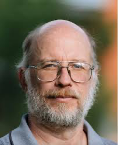
Dr. David Wishart’s life and career represent an unusual convergence of scientific curiosity, institutional leadership, entrepreneurship, and Indigenous trailblazing. A proud member of the Métis Nation of Alberta, Dr. Wishart’s family history is rooted in the forced displacement of his Métis ancestors from the Red River Settlement in Manitoba to Alberta in 1885. It was in southern Alberta that his family established the community of Rosebud in 1886. His ancestors later moved to Calgary and then Edmonton in the 1950s. Born and raised in Edmonton, Dr. Wishart has remained deeply connected to Alberta and to the Métis community throughout his career.
Dr. Wishart’s academic path was marked from the outset by overcoming long-standing barriers to Indigenous students and finding ways to cross between disciplines. In 1983, he became the first Indigenous Canadian to earn a degree in Physics from a Canadian university. He subsequently completed his PhD in Molecular Biophysics and Biochemistry at Yale University in 1991, becoming only the second Indigenous Canadian to receive a doctorate in any scientific discipline. Upon returning to Canada, he began his scientific career in biochemistry at the University of Alberta, where he became Canada’s first Indigenous biochemist. Interestingly, his history of “firsts” didn’t end there.

Dr. Wishart also holds the distinction of being the world’s first Indigenous bioinformatician. While still an undergraduate, Dr. Wishart began writing his first bioinformatics software programs in 1983. This was at a time when computational biology was still an emerging specialty and the field of bioinformatics was very much in its infancy. He later founded BioTools Inc. in 1995, Canada’s first bioinformatics company. After establishing BioTools, he began to build the national infrastructure needed to train scientists in this rapidly expanding field. This was done through the Canadian Bioinformatics Workshops, which he launched in 1999, and Canada’s first undergraduate degree program in bioinformatics, which he introduced at the University of Alberta in 2003. Thanks to these efforts, Dr. Wishart has helped train more than 6,000 Canadian researchers capable of using computational approaches to address complex biological and medical questions.

When Dr. Wishart joined the University of Alberta as an Assistant Professor in 1995, he became the first Indigenous professor to be appointed to a Faculty of Pharmacy in North America. Throughout his time at the University of Alberta, Dr. Wishart has endeavoured to cross departmental, faculty, and institutional boundaries. His broad scientific interests and transdisciplinary interests made him the first Indigenous scientist in Canada to be appointed as a faculty member to various departments including Computing Science, Biological Sciences, and Pathology. In 2003, he became just the second Indigenous faculty member at the University of Alberta (after Olive Dickason) to be promoted to the rank of full professor. That same year, he also became the first Indigenous scientist in Canada to hold a full professorship in a Computing Science department. In 2018, he became both the first Indigenous faculty member at the University of Alberta to be named a Distinguished University Professor and the first Indigenous scholar in Canada to attain the rank of University Professor, the highest academic distinction awarded by Canadian universities.
In 2017, Dr. Wishart had the distinction of becoming the first Indigenous scientist in Canada elected as a Fellow of the Royal Society of Canada. In 2024, he became the first Indigenous recipient of the NSERC Brockhouse Prize for Interdisciplinary Science. In 2025 and 2026, he received the NSERC Herzberg Gold Medal (Canada’s highest scientific honour), the University Cup (the University of Alberta’s highest award), and the Governor General’s Innovation Award (one of the highest honours awarded by the Governor General of Canada). Collectively, these are the most prestigious honours ever given to an Indigenous scientist in Canada. In large part, they recognize how Dr. Wishart’s 35-year academic career has been defined by interdisciplinary research excellence, educational leadership, innovation, and public benefit.
As a scientist, Dr. Wishart is widely regarded as a pioneer and key innovator in bioinformatics, metabolomics, and exposomics. His work has transformed how scientists investigate the molecular basis of health, disease, environmental exposure, nutrition, and drug response. In 2005, he launched the Human Metabolome Project (HMP), becoming the first Indigenous person to lead a large-scale, transnational omics project. The HMP remains the largest and longest-running metabolomics initiative in the world. The project has established the University of Alberta and Canada as a leader in metabolomics and helped define metabolomics as a central component of precision medicine and systems biology. The HMP has helped advance key knowledge about the 250,000 small molecules that shape human physiology. Dr. Wishart’s scientific success has brought him significant visibility. With more than 166,000 citations and an h-index of 154, Dr. Wishart is the world’s most highly cited Indigenous scientist and one of the most cited scientists in Canada.
Dr. Wishart’s influence also extends well beyond academia. He has founded, led, or managed 12 different biotechnology companies, whose combined activities currently employ more than 100 people and generate more than $5 million/year in revenues. These enterprises have translated scientific ideas into practical tools, software, databases, and health-related technologies. As a result, Dr. Wishart is regarded as one of the most successful Indigenous entrepreneurs in Canada. His translational work has inspired many other Canadian and Indigenous scientists, showing how academic discovery can become an engine for innovation, employment, and social benefit.
Throughout the course of his 35-year academic career, Dr. Wishart has been awarded national and international grants worth more than $200 million, the largest sum ever awarded to an Indigenous scientist. This success has allowed him to direct resources to open doors for other Indigenous Canadian scholars. For instance, at the University of Alberta, he leads initiatives such as the Indigenous Training Circle in Bioinformatics Training (ITCBT) and supports research applying genomics and metabolomics to the study of Indigenous medicinal plants. Through these efforts, he has helped create opportunities for Indigenous students, trainees, and communities to participate directly in the scientific and technological fields shaping the future.
Dr. Wishart believes in leading by example and that Indigenous excellence is not peripheral to Canadian science, but foundational to its future.